Welcome to the Mathematical World!
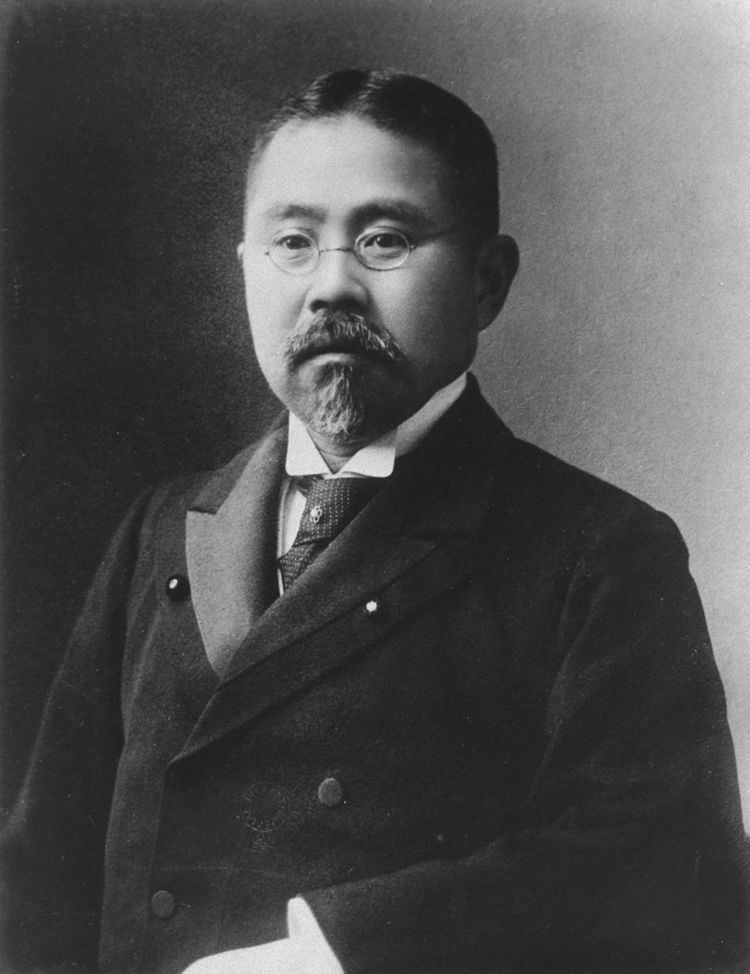
Kikuchi Dairoku
Promoter of Mathematics and Science in Modern Japan
Kikuchi Dairoku (1855–1917) was a Japanese mathematician, educator, and statesman who became one of the first Japanese scholars to receive formal training in mathematics abroad. He studied at University College London and the University of Cambridge, where he was exposed to modern Western mathematical thought, including analysis and geometry. Returning to Japan, he brought back advanced ideas that helped shape the nation’s education system during the Meiji Restoration.
Kikuchi specialized in geometry and the theory of numbers, with particular interest in conic sections and analytical methods. He also emphasized the importance of rigorous proofs and logical structure in mathematical education, reflecting the influence of European traditions. His academic work included studies in algebraic identities and properties of curves, often expressed using symbolic forms such as quadratic equations: \ which describe general conic sections. By promoting such analytical tools, he aligned Japan with global standards in mathematics.
Beyond his scholarly work, Kikuchi played a leading role in Japanese higher education. He became president of Tokyo Imperial University and later served as Japan’s Minister of Education. His reforms emphasized scientific literacy, teacher training, and the development of mathematics as both a practical and theoretical discipline.
Kikuchi’s influence extended into policy-making, where he worked to modernize Japan’s curriculum and promote international exchange. His life illustrates the transformation of Japan into a modern nation through science and education, and he remains an important figure in both mathematics and national development.

All rights reserved by the Mathematical Unity
Contact: +8801400044645
Email: mathematicalhorse1453@gmail.com
Our Discord Server: Mathematical Unity [Ulus Riyadiyat]